Don't ship the wrong game
My notes from the talk René Habermann gave at GameCamp 2025.
Framework
A framework on how to be sustainable as an indie game studio.
Game Jam => Feedbacks
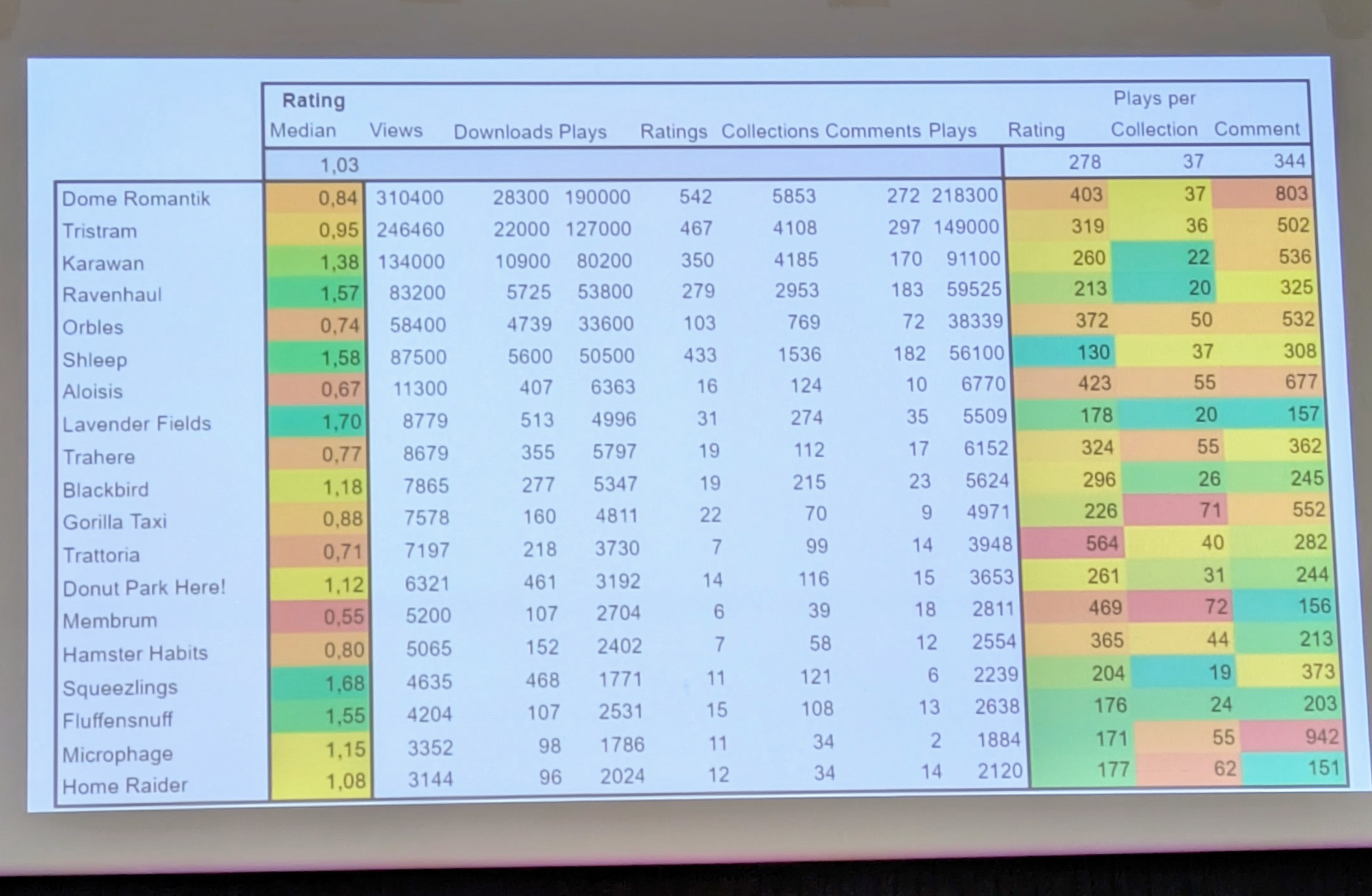
Feedbacks:
- rating
- comments
- 10min experience played for 10s of hours
Don't necessarily validate your game idea on social media, Dome Keeper didn't had a lot of social media traction.
Demo release peaked
- broad appeal
- some virality
Timeline:
3 days game jam
8 weeks refined prototype to demo
9 months to release (2 demos)
Never stop having new people in the demos
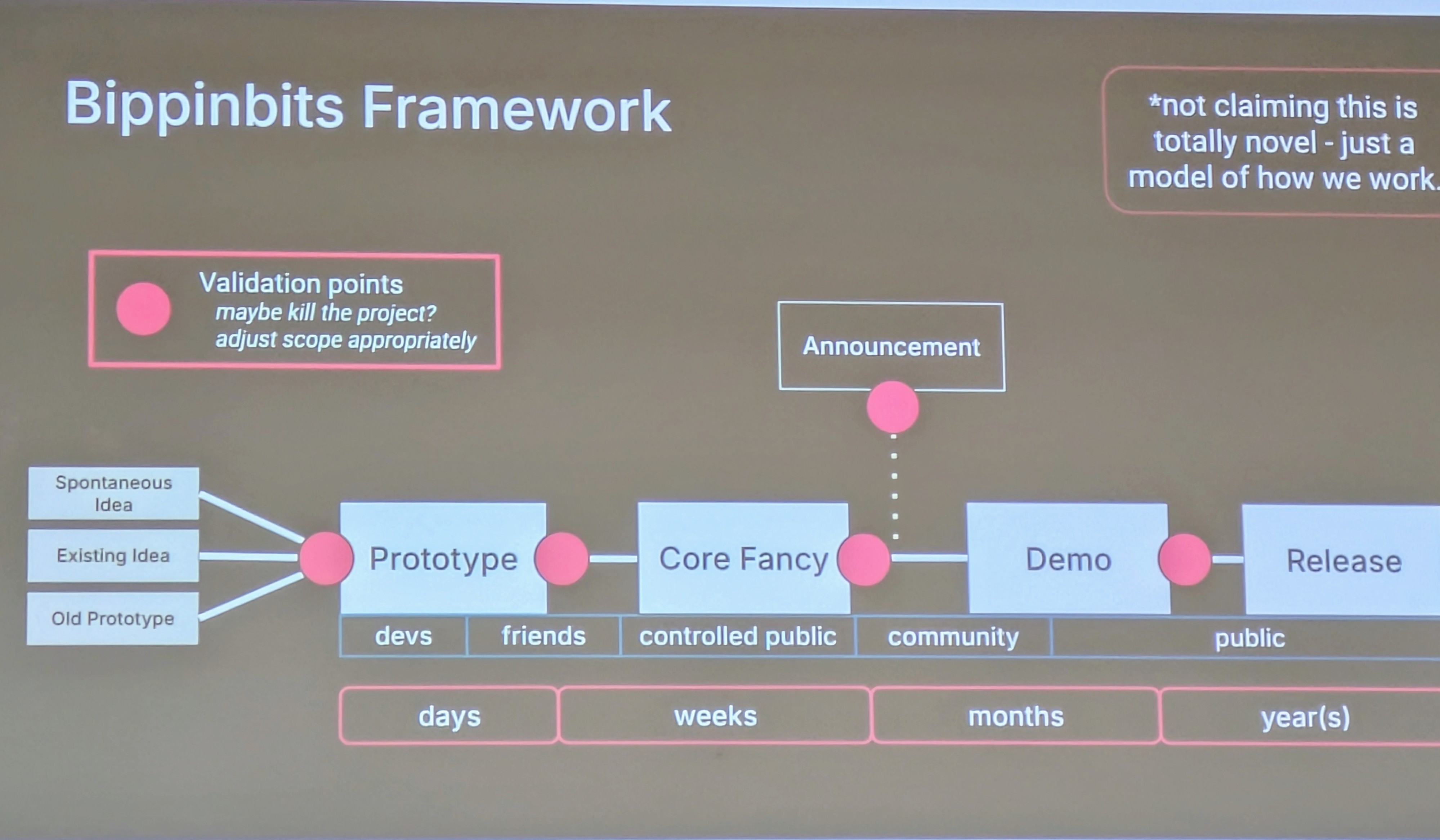
Validations points :
- should we abandoned the project
Core fancy: not a vertical slice.
What's a wrong game
A game that makes you close the studio
- Undesired: not enough follower / wishlist => no positive validation
- didn't validate against the market
- or dev. Don't listen for result of validation
- misaligned: a lot of people want what they thought you were making, but it's different from what you where making
- lot of positive validation
- decent launch day
- causes:
- comms on game are off
- devs didn't understand or respect player sentiment
- validation and playtest only with a closed player group => keep testing first player XP
- how to avoid
- keep testing first player XP, keep adding players to playtest, keep playtesting
- align the entire team
- define experience goals for your game and check against them during dev
- build for the players
- keep it playable
- overdeveloped : spent too much time developing, don't recoup:
- positive validation
- medium metric
- made a huge multi-year project
- causes:
- dev loves the game too much
- too little prod. Constraints
- insecure / volatile opinions / keep redoing stuff again and again
- overspend on art
- how to avoid
- use validation points to inform scope of next step
- retain prototyping spirit
- flexible scope
- go by experience goals, not feature liste
- game shipped well, but every one is burned out
How to make a prototype
Guidelines
- Keep it simple
- clarify requirements as soon as possible, if you don't know how to clarify : keep it simple
- for example don't build map génération before doing map by hand (maybe with some chunk randomization ) so you can use player feedback to improve and build the actual generation later
- alternative shortcut
- instead of doing the actual solution
- 80% is enough
- save time and move on
Validating prototype
Let people play your game
- especially unfriendly internet people
- you learn with ever playtest
- keep you motivated
Form an holistic view with multiple points:
- game jam results
- but also number of ratings (test appeal)
- playtest
- social media hype
- itch.io ratings / appeal /...
- how many plays does this game needs for a player to leave feedback
- comments :
- small nice comments, not a good sign
- long / emotional comments show better appeal
- media reception for game jam is a positive point
- YouTube videos even for game jam
- ppl make a video : good
- variation in views (better views than average for example)
- do we feel passionate about the game
- do we have a vision for the full game
- do our skills match with what's needed
- talk about your game
- do people get existed
- do they add their own ideas
All this should paint a clear picture